
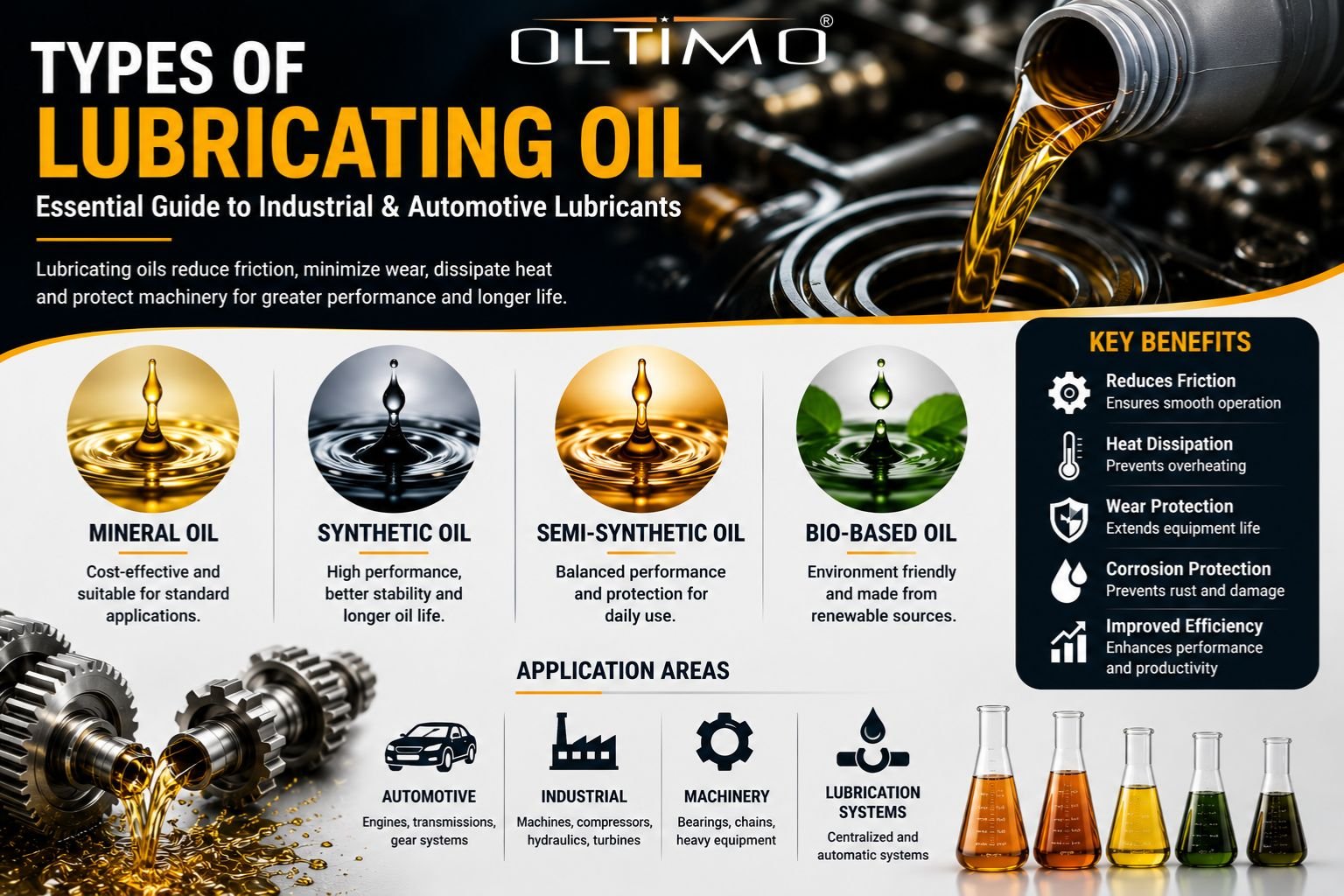
Types of Lubricating Oil : Complete Guide to Industrial & Automotive Lubricants
Choosing the right Types of Lubricating Oil is essential for improving machine efficiency, reducing wear, and increasing equipment lifespan. Whether for vehicles, industrial machinery, or manufacturing systems, proper lubrication ensures smoother performance, better fuel economy, and lower maintenance costs.
Modern engines and machines operate under extreme temperatures and pressure. Without proper lubrication, friction damages components and reduces operational efficiency. Understanding different lubrication products helps users select the right solution for automotive, commercial, and industrial applications.
At Oltimo, advanced lubrication products are engineered to meet the growing demands of modern machinery and vehicles while ensuring long-term reliability in Indian operating conditions.
What Are Types of Lubricating Oil?
Types of Lubricating Oil refer to specially formulated oils designed to reduce friction, dissipate heat, and protect moving components in engines and machinery. These oils are used across automotive, industrial, and heavy-duty applications.
A quality Lubricant Oil creates a protective layer between moving surfaces, minimizing direct metal contact and improving operational efficiency.
Main Functions of Lubricating Oils
- Reduces friction between components
- Prevents overheating
- Minimizes wear and tear
- Protects against corrosion
- Improves machine efficiency
- Extends machinery lifespan
Modern lubricant technology has significantly improved oil performance by introducing advanced additives for enhanced protection and durability.
Explore premium automotive lubricants designed for advanced engine protection and performance.
Why Lubrication Is Important
Lubrication is essential for maintaining performance and preventing machinery failure. Without proper lubrication, engines and industrial systems experience rapid wear.
Benefits of Lubrication
| Benefit | Impact |
|---|---|
| Friction Reduction | Smoother operation |
| Heat Dissipation | Prevents overheating |
| Corrosion Protection | Longer component life |
| Improved Efficiency | Better performance |
| Reduced Downtime | Lower maintenance costs |
Effective lubrication systems ensure continuous oil supply to moving parts, improving machine reliability and productivity.
Proper industrial lubrication also plays a major role in reducing operational breakdowns in factories and manufacturing plants.
Main Types of Lubricating Oil
Understanding the various Types of Lubricating Oil helps users choose suitable lubrication products for different applications.
Mineral Lubricating Oil
Mineral oils are refined from crude petroleum and are commonly used in standard engines and machinery.
Advantages of Mineral Oil
- Affordable
- Easily available
- Suitable for older engines
Applications of Mineral Oil
- Passenger vehicles
- Basic industrial equipment
- Standard machinery oils
Mineral Lubricant Oil is widely used where operating conditions are moderate.
Synthetic Lubricating Oil
Synthetic oils are chemically engineered for high-performance applications.
Benefits of Synthetic Oil
- Excellent thermal stability
- Superior wear protection
- Longer oil life
- Improved fuel efficiency
Synthetic engine oil performs exceptionally well in high-temperature environments.
Modern lubricant technology has made synthetic oils highly effective for advanced automotive and industrial systems.
Semi-Synthetic Lubricating Oil
Semi-synthetic oils combine mineral and synthetic formulations.
Features of Semi-Synthetic Oil
- Balanced performance
- Better affordability
- Improved engine protection
These oils are popular in both automotive lubricants and light industrial equipment.
Bio-Based Lubricating Oil
Bio-based oils are environmentally friendly alternatives made from renewable resources.
Advantages of Bio-Based Oils
- Biodegradable
- Reduced environmental impact
- Sustainable lubrication option
Industries focusing on sustainability increasingly adopt these lubrication solutions for eco-friendly operations.
Comparison Chart of Lubricating Oils
| Oil Type | Performance | Cost | Best Application |
|---|---|---|---|
| Mineral Oil | Moderate | Low | Older vehicles |
| Synthetic Oil | Excellent | High | High-performance engines |
| Semi-Synthetic | Good | Moderate | Daily-use vehicles |
| Bio-Based Oil | Eco-Friendly | Moderate | Sustainable industries |
Understanding these Types of Lubricating Oil helps users make informed lubrication decisions.
Automotive Lubricants and Their Applications
Modern vehicles rely heavily on high-quality automotive lubricants for smooth and reliable performance.
Engine Oil for Cars
Car engines operate under intense pressure and heat. A quality engine oil reduces wear and keeps internal components clean.
Benefits of Engine Oil
- Better mileage
- Improved acceleration
- Enhanced engine cleanliness
- Reduced carbon deposits
Premium engine oil formulations improve long-term engine durability.
Motorcycle Lubricants
Motorcycles require specialized lubrication for engines, transmissions, and chains.
Importance of Motorcycle Lubrication
- Engine protection
- Gear lubrication
- Friction reduction
Advanced lubrication solutions ensure smoother riding performance and reduced maintenance.
Transmission Fluids
Transmission systems require proper lubrication to maintain gear efficiency and smooth shifting.
These lubricant applications are critical for both manual and automatic vehicles.
Brake and Hydraulic Fluids
Hydraulic fluids ensure reliable braking and operational safety.
High-quality Lubricant Oil improves hydraulic system responsiveness and durability.
Industrial Lubricants and Machinery Applications
Industries depend on high-performance industrial lubricants for maintaining operational efficiency.
Hydraulic Oils
Hydraulic systems require stable lubrication for pressure transfer and component protection.
Applications of Hydraulic Oils
- Manufacturing equipment
- Hydraulic presses
- Construction machinery
Reliable industrial lubrication prevents breakdowns and improves productivity.
Gear Oils
Gear oils protect industrial gear systems from excessive friction and wear.
Key Features of Gear Oils
- Heavy-load protection
- Heat resistance
- Anti-wear performance
These machinery oils are essential in heavy-duty industrial environments.
Compressor Oils
Compressors generate significant heat during operation.
High-quality industrial oil improves cooling efficiency and extends compressor life.
Turbine Oils
Turbines require stable lubrication for continuous high-speed operation.
Modern lubrication systems ensure uninterrupted oil circulation and improved reliability.
Industrial Greases
Greases are used where liquid oils may not remain effective.
Benefits of Industrial Greases
- Strong adhesion
- Water resistance
- Heavy-load support
These lubricant applications are widely used in bearings and industrial equipment.
Explore high-performance industrial lubricants engineered for demanding industrial operations and machinery protection.
Industrial Lubrication Chart
| Industrial Lubricant | Primary Use |
|---|---|
| Hydraulic Oil | Hydraulic systems |
| Gear Oil | Industrial gears |
| Compressor Oil | Air compressors |
| Turbine Oil | Power systems |
| Industrial Grease | Bearings & joints |
Proper industrial lubrication improves equipment lifespan and operational stability.
Understanding Lubrication Systems
Modern industries use advanced lubrication systems to improve efficiency and reduce maintenance.
Manual Lubrication Systems
Operators manually apply lubricant to machinery components.
Suitable For
- Small workshops
- Basic machinery
Automatic Lubrication Systems
Automatic systems deliver lubricant continuously during operation.
Benefits of Automatic Systems
- Reduced downtime
- Better lubrication consistency
- Lower labor costs
Advanced lubrication systems improve productivity in large-scale manufacturing units.
Centralized Lubrication Systems
These systems supply lubricant to multiple machine points from a central unit.
Advantages of Centralized Systems
- Efficient lubrication management
- Improved machinery lubrication
- Reduced maintenance effort
Large industries prefer centralized lubrication solutions for operational efficiency.
Importance of Lubricant Technology
Modern lubricant technology has transformed machine performance and equipment durability.
Key Innovations in Lubricant Technology
Advanced Additives
Improve wear resistance and corrosion protection.
Thermal Stability
Maintains performance at extreme temperatures.
Low-Friction Formulations
Improve fuel efficiency and machinery performance.
Eco-Friendly Oils
Reduce environmental impact while maintaining efficiency.
The evolution of lubricant technology continues to support modern industrial and automotive advancements.
How to Choose the Right Lubricating Oil
Selecting suitable Types of Lubricating Oil depends on equipment type, operating conditions, and performance requirements.
Consider Viscosity Grades
Viscosity determines oil flow characteristics under different temperatures.
Common Viscosity Grades
- 5W-30
- 10W-40
- 20W-50
The correct engine oil grade ensures optimal engine performance.
Understand Operating Conditions
High Temperatures
Use synthetic oils.
Heavy Loads
Choose heavy-duty industrial lubricants.
Dusty Environments
Use oils with enhanced contamination protection.
Proper machinery lubrication improves operational reliability in demanding conditions.
Follow OEM Recommendations
Manufacturers specify suitable oil grades and performance standards.
Using recommended Lubricant Oil ensures warranty protection and long-term performance.
Common Mistakes to Avoid
Many users damage equipment by selecting incorrect lubrication products.
Common Lubrication Mistakes
- Ignoring viscosity ratings
- Delaying oil replacement
- Mixing incompatible oils
- Using low-quality lubricants
- Neglecting maintenance schedules
Proper lubrication solutions prevent unnecessary wear and expensive repairs.
Future of Lubrication Industry
The lubrication industry is evolving rapidly with technological innovation and sustainability initiatives.
EV-Compatible Lubricants
Electric vehicles require specialized cooling and lubrication products.
Smart Lubrication Systems
Sensors and automation improve oil monitoring and maintenance efficiency.
Advanced lubrication systems help industries reduce downtime and improve productivity.
Sustainable Lubrication Products
Eco-friendly industrial oil products are becoming increasingly important in manufacturing and automotive sectors.
Why Oltimo Lubes & Chemicals Pvt Ltd Stands Out
Oltimo focuses on delivering high-performance lubrication products engineered for Indian conditions.
Advanced Product Formulations
Modern formulations improve protection, efficiency, and durability.
Wide Product Range
Oltimo offers:
- Automotive lubricants
- Industrial lubricants
- Hydraulic oils
- Gear oils
- Specialty machinery oils
Visit the Oltimo shop to explore advanced lubrication products for automotive and industrial needs.
Reliable Lubrication Solutions
The company provides advanced lubrication solutions for automotive, manufacturing, and industrial applications.
Customer-Focused Innovation
Oltimo continuously invests in lubricant technology to deliver reliable and future-ready products.
Performance Comparison Chart
| Feature | Standard Oil | Advanced Lubricating Oil |
|---|---|---|
| Wear Protection | Moderate | High |
| Heat Resistance | Average | Excellent |
| Oil Life | Short | Long |
| Efficiency | Standard | Superior |
| Corrosion Protection | Basic | Advanced |
Choosing the correct Types of Lubricating Oil improves both machine performance and operational reliability.
Conclusion
Understanding different Types of Lubricating Oil is essential for improving machine performance, extending equipment lifespan, and reducing maintenance costs. From automotive engines to industrial machinery, selecting the right lubrication product ensures smoother operation and long-term reliability.
Modern Lubricant Oil products are engineered with advanced additives and performance-enhancing technologies to meet the demands of modern industries and vehicles. Whether you require high-performance automotive lubricants, heavy-duty industrial lubricants, or advanced lubrication solutions, proper oil selection plays a major role in operational efficiency.
Oltimo Lubes & Chemicals Pvt Ltd continues to provide reliable, innovative, and performance-focused lubrication products designed for modern industrial and automotive applications.
Frequently Asked Questions
1. What are the main Types of Lubricating Oil?
The main Types of Lubricating Oil include mineral oil, synthetic oil, semi-synthetic oil, and bio-based oil.
2. Which engine oil is best for modern vehicles?
Synthetic engine oil is generally preferred for modern high-performance engines.
3. Why are industrial lubricants important?
Industrial lubricants reduce wear, improve efficiency, and extend machinery lifespan.
4. What is the role of lubrication systems?
Lubrication systems ensure continuous oil supply to moving machine parts.
5. What are common lubricant applications?
Common lubricant applications include engines, gear systems, compressors, turbines, and hydraulic equipment.
6. How does lubricant technology improve performance?
Modern lubricant technology enhances thermal stability, wear protection, and fuel efficiency.
7. Why is machinery lubrication necessary?
Proper machinery lubrication reduces friction and prevents equipment failure.
8. How often should lubricating oil be changed?
Oil replacement intervals depend on operating conditions and manufacturer recommendations.